Written by Steven E. Cowen, Esq. Attorney, Debt Solution Law Group | State Bar of California #132988 | Full attorney bio →
Is Your Merchant Cash Advance Actually a Loan in Disguise?
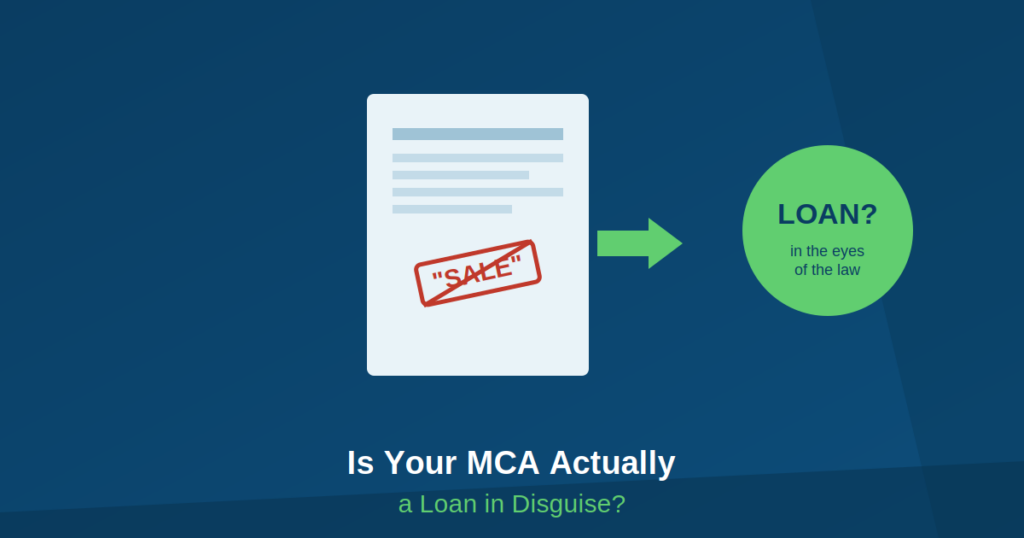
Merchant cash advance companies structure their agreements as a “sale” of future receivables, not a loan — a distinction that matters because loans are subject to usury laws (interest rate caps), while a true sale of receivables generally is not. But some courts have found that certain MCA agreements, despite the “sale” label, function more like loans in substance — and when that happens, the interest rates MCA companies typically charge can far exceed what usury law allows.
Why the Label Doesn’t Always Control
Courts that have examined this question generally look past how an agreement is labeled and instead examine how it actually operates. Factors that have led some courts to recharacterize an MCA agreement as a loan include:
- A fixed repayment amount and schedule, regardless of the business’s actual sales
- Personal guarantees requiring repayment even if the business fails entirely
- No true reconciliation process adjusting payments to match actual receivables
- A fixed term to repayment, rather than an open-ended repayment tied purely to future sales
None of these factors is decisive on its own, and outcomes vary significantly by jurisdiction and the specific facts of each contract. This is a genuinely unsettled and evolving area of law — some courts have accepted this argument, others have rejected it, and the analysis is highly fact-specific.
What This Could Mean
If an MCA agreement is recharacterized as a loan, the effective interest rate — often calculated in the triple digits when expressed as an annual percentage rate — may violate state usury limits. This could affect how much is actually owed, or provide leverage in a broader debt restructuring under Chapter 11 Subchapter V.
What This Doesn’t Mean
This is not a guaranteed defense, and it doesn’t automatically erase the debt. It’s one argument among several that may apply depending on the specific contract language and the business’s circumstances.
What To Do
Because this analysis depends heavily on the specific terms of the MCA agreement in question, it’s worth having the actual contract reviewed before assuming this defense does or doesn’t apply.
If you would like to learn more about how the Small Business Reorganization Act can help your business, please call us at (619) 202-7511, Ext. 1, or submit your contact information using the contact form on our website to schedule a free consultation.
This article is intended to provide general information about business debt issues and does not constitute legal advice. Every situation is different, and outcomes depend on the specific facts of each case. Please consult with an attorney regarding your specific circumstances.