Written by Steven E. Cowen, Esq. Attorney, Debt Solution Law Group | State Bar of California #132988 | Full attorney bio →
What Actually Happens When You Default on a Merchant Cash Advance
Missing a merchant cash advance payment is stressful, and MCA companies are often aggressive about collection — but the actual legal process that follows a default is usually different from what collection calls make it sound like. Here’s a realistic picture of what typically happens, and what options exist.
The Immediate Aftermath
Most MCA agreements define default broadly — sometimes as a single missed or reduced payment. Once a default is declared, the funder may attempt to:
- Debit the full remaining balance from the business’s bank account
- Contact the business, its owners, and sometimes vendors or customers directly
- Threaten legal action, including referencing a confession of judgment if one was signed
- Refer the account to a collections attorney
What’s Often Exaggerated
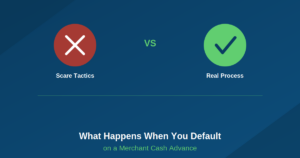
Collection calls sometimes imply consequences that aren’t accurate — criminal prosecution for defaulting on a commercial debt is not a real risk in the vast majority of cases, since this is a civil, not criminal, matter. Aggressive language on a phone call is not the same as an actual court judgment or enforcement action.
What Actually Has Legal Weight
- A judgment, if the funder obtains one through the court process (or through a confession of judgment where enforceable)
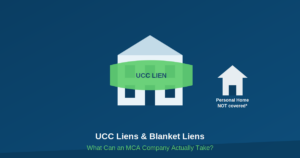
- A UCC lien, if one was filed against business assets as part of the agreement
- A personal guarantee, if the owner signed one, which may allow the funder to pursue personal assets
Real Options at This Stage
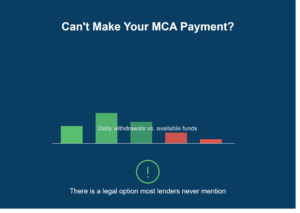
- Negotiation — sometimes possible, particularly once a funder realizes continued aggressive collection isn’t yielding payment.
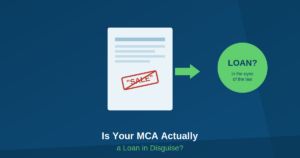
- Reviewing the agreement itself — some MCA agreements contain terms that may be challenged depending on how they were structured (see our related post on loan recharacterization).
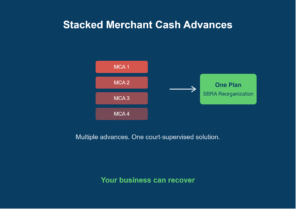
- Business reorganization under the SBRA — filing a Chapter 11 Subchapter V case immediately stops collection activity, including UCC lien enforcement, while a repayment plan is worked out based on what the business can actually afford.
Every stacking situation is different, and what works depends on how many advances are involved, whether personal guarantees were signed, and how much runway the business realistically has left. The earlier a business owner gets an accurate picture of their options, the more of those options are actually available.
If you would like to learn more about how the Small Business Reorganization Act can help your business, please call us at (619) 202-7511, Ext. 1, or submit your contact information using the contact form on our website to schedule a free consultation.
This article is intended to provide general information about business debt issues and does not constitute legal advice. Every situation is different, and outcomes depend on the specific facts of each case. Please consult with an attorney regarding your specific circumstances.