Escrito por Steven E. Cowen, Esq.
Abogado, Debt Solution Law Group | Colegio de Abogados del Estado de California
#132988 | Biografía completa del abogado →
Si ha tomado un segundo, tercer o cuarto adelanto de efectivo comercial para mantenerse al día con los pagos del primero, está lidiando con lo que se conoce como "acumulación" — y es una de las formas más rápidas en que una deuda comercial manejable se convierte en una crisis genuina.
Esto es lo que realmente está sucediendo, y más importante aún, qué puede hacer al respecto.
Cómo Sucede la Acumulación
Generalmente comienza de la misma manera: el flujo de caja se aprieta, un prestamista de MCA ofrece financiamiento rápido, y se siente como un puente a corto plazo. Luego se agrega un segundo adelanto para cubrir los retiros del primero. Luego un tercero. Cada nuevo adelanto tiene su propio retiro diario o semanal, y pronto varios prestamistas están retirando de la misma cuenta los mismos días — a veces retirando más de lo que el negocio genera ese día.
Por Qué Esto Se Sale de Control Tan Rápido
Cada MCA se calcula bajo el supuesto de que es el únicamente que se está pagando. Cuando se acumulan dos, tres o cuatro adelantos, el retiro diario combinado a menudo excede lo que cualquier prestamista individual había previsto — que es exactamente la razón por la que los dueños de negocios en esta situación frecuentemente describen sentir que están "corriendo sin avanzar" o retrocediendo sin importar cuánto trabajen.
Sus Opciones Reales
1. Negociar directamente con cada prestamista
Posible, pero difícil — especialmente con varios prestamistas que no tienen incentivo para coordinarse entre sí, y que pueden haber presentado (o amenazado con presentar) una Confesión de Sentencia.
2. Consolidar en otro préstamo
Rara vez resuelve el problema subyacente y a veces puede empeorar las cosas si agrega otra capa de deuda en lugar de resolver las existentes.
3. Reorganizar bajo la Ley de Reorganización de Pequeñas Empresas (SBRA)
Esta es la opción sobre la que a la mayoría de los dueños de negocios con MCA acumulados nunca les han hablado. Presentar bajo el Chapter 11, Subchapter V permite que un negocio:
- Detenga todos los retiros activos de cada prestamista de MCA a la vez, inmediatamente al presentarse el caso
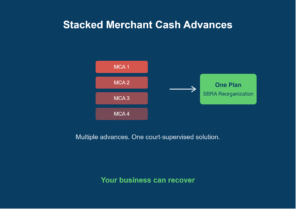
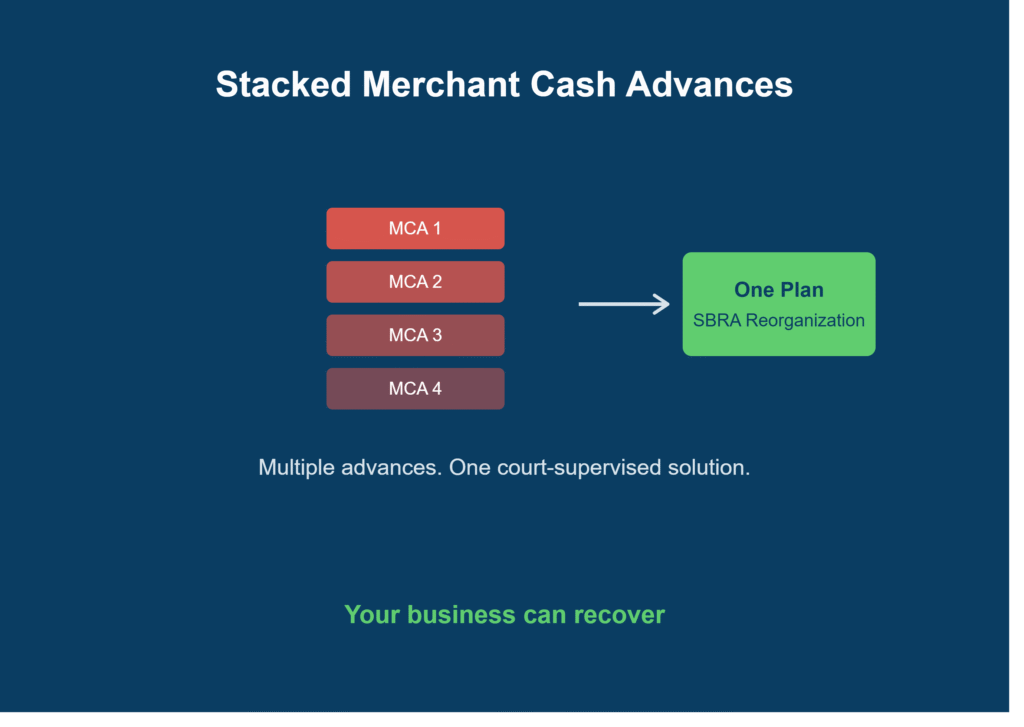
- Combine varios adelantos acumulados en un solo plan de pago supervisado por el tribunal
- A menudo reduzca la cantidad total adeudada entre todos los adelantos combinados
- Continúe operando el negocio durante todo el proceso
Por Qué Esto Importa Más Cuando los Adelantos Están Acumulados
Negociar con un prestamista es difícil. Negociar con tres o cuatro prestamistas simultáneamente, cada uno con sus propios términos y influencia legal, es exponencialmente más difícil — y es exactamente el tipo de situación para la que se diseñó la SBRA: abordarla mediante un solo proceso legal unificado en lugar de negociaciones separadas.
Si Tiene Adelantos Acumulados, el Tiempo Importa
Mientras más tiempo permanezcan activos varios adelantos, más erosionan los retiros combinados la capacidad del negocio para recuperarse por sí solo. Los dueños de negocios que actúan temprano — antes de que un prestamista escale a una acción legal — típicamente tienen significativamente más opciones que quienes esperan.