Escrito por Steven E. Cowen, Esq.
Abogado, Debt Solution Law Group | Colegio de Abogados del Estado de California
#132988 | Biografía completa del abogado →
Es una de las preguntas más comunes que se hacen los dueños de negocios cuando comienzan a investigar cómo salir de una deuda de adelanto de efectivo comercial (MCA) — y también una de las más incomprendidas.
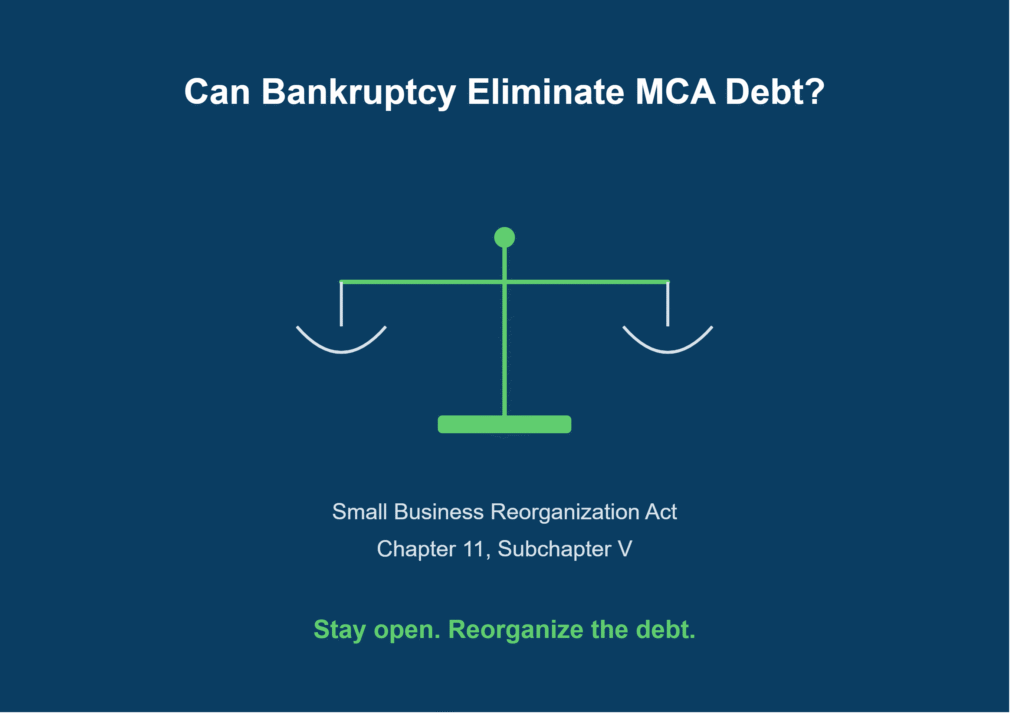
La respuesta corta: sí, en muchos casos, una reorganización mediante bancarrota puede reducir significativamente o eliminar por completo la deuda de MCA en California. Pero el tipo de bancarrota importa enormemente, y la mayoría de las personas que investigan este tema no saben que existe una opción diseñada específicamente para situaciones como la suya.
Por Qué la Palabra "Bancarrota" Asusta a la Mayoría de los Dueños de Negocios
Cuando la mayoría de las personas escuchan la palabra "bancarrota", imaginan una liquidación — cerrar las puertas, vender los activos, y abandonar todo lo que construyeron. Eso es el Capítulo 7, y no es de lo que estamos hablando aquí.
La Opción que la Mayoría Nunca Ha Escuchado: la SBRA
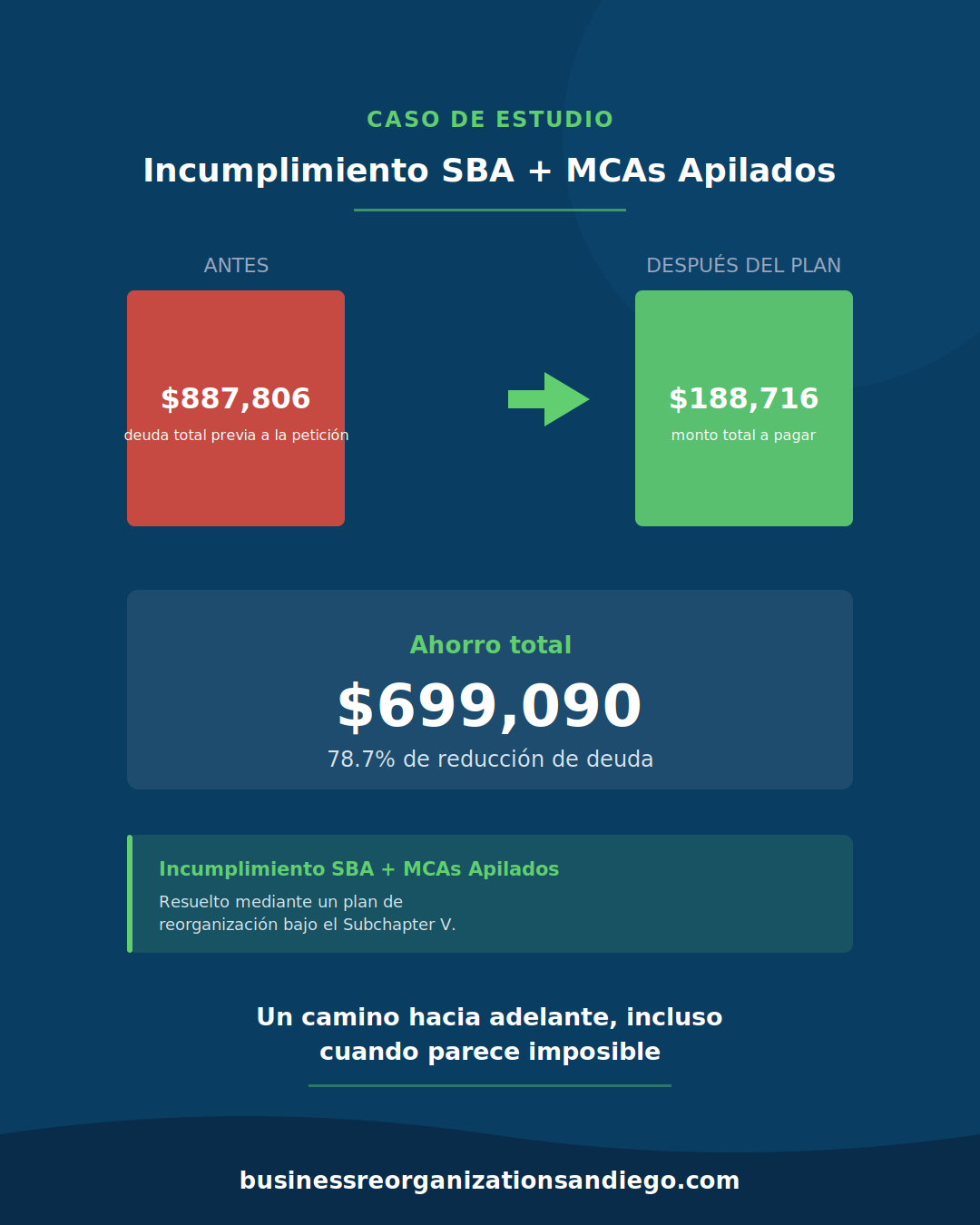
La Ley de Reorganización de Pequeñas Empresas (SBRA) — Chapter 11, Subchapter V — fue creada específicamente para pequeñas y medianas empresas que necesitan reestructurar su deuda mientras se mantienen abiertas. Es más rápida y menos costosa que el Capítulo 11 tradicional, y fue diseñada pensando en negocios exactamente como el suyo.
Bajo la SBRA, un negocio puede:
- Continuar operando con normalidad durante todo el proceso
- Proponer un plan de pago basado en lo que el negocio realmente puede pagar — no en lo que el prestamista de MCA exigía originalmente
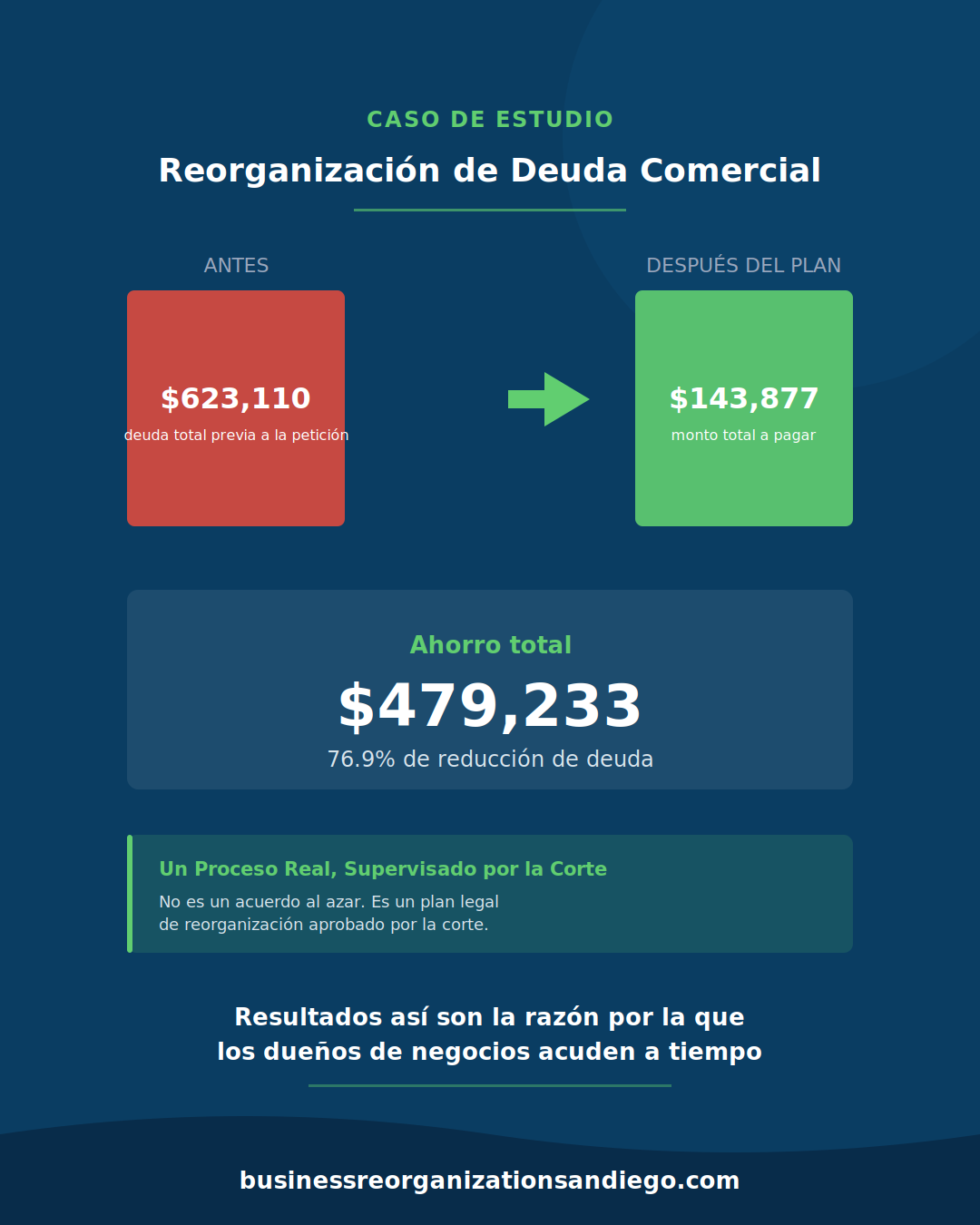
- Con frecuencia, reducir la deuda no garantizada, incluida la deuda de MCA, muy por debajo del monto original
- Detener de inmediato las llamadas de cobro, los retiros y las demandas en cuanto se presenta el caso
¿Califica la Deuda de MCA?
En la mayoría de los casos, sí. Los acuerdos de MCA generalmente se tratan como deuda no garantizada en este tipo de proceso, lo que significa que con frecuencia son sujetos a una reducción significativa — a veces a su eliminación total — dependiendo del panorama financiero general del negocio.
¿Perderé mi Negocio?
No. Esto es lo opuesto de lo que la mayoría asume. La SBRA fue diseñada para permitir que los dueños de negocios sigan operando su negocio mientras la deuda se reestructura en torno a lo que realmente es sostenible.
¿Es Elegible mi Negocio?
Por lo general, los negocios con una deuda total menor a $3,424,000 en deudas garantizadas y no garantizadas, líquidas y no contingentes en conjunto (excluyendo deudas con afiliados o personas internas de la empresa), y que generan suficientes ingresos para cubrir sus gastos operativos, están bien posicionados para usar esta opción. Cada situación es diferente, por lo que una consulta gratuita es la manera más rápida de obtener una respuesta real.
Programe una consulta gratuita para ver si su negocio califica →