Written by Steven E. Cowen, Esq. Attorney, Debt Solution Law Group | State Bar of California #132988 | Full attorney bio →
UCC Liens and Blanket Liens: What an MCA Company Can (and Can’t) Actually Take From Your Business
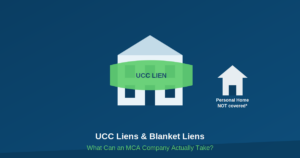
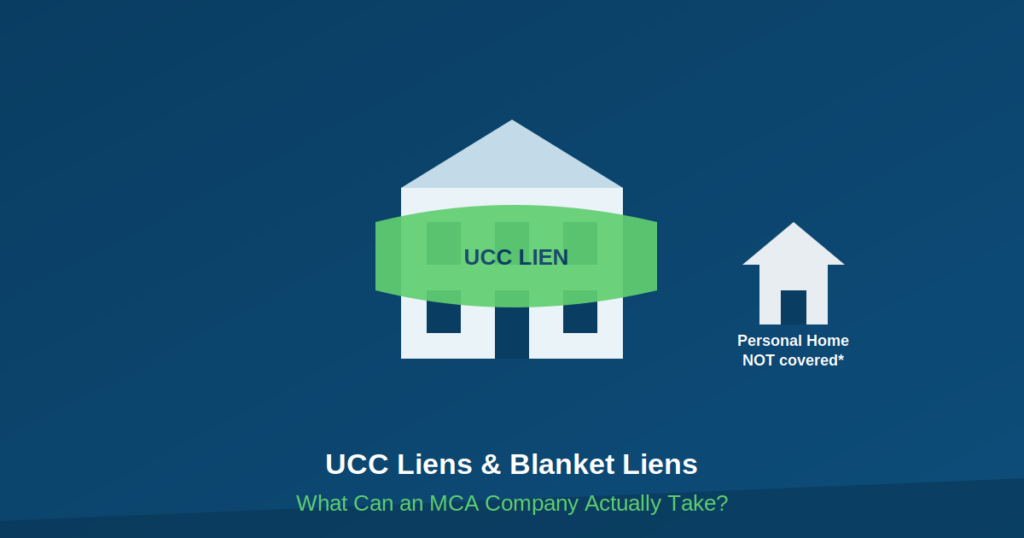
Many merchant cash advance agreements include a UCC-1 filing — often called a “blanket lien” — covering the business’s assets as security for the advance. The term “blanket” sounds like it covers everything, including personal belongings and property. In most cases, that’s not accurate, and understanding the real scope of a UCC lien can ease a lot of unnecessary fear.
What a UCC Lien Actually Is
A UCC-1 financing statement is a public filing that puts other creditors on notice that a lender has a security interest in specific collateral. For MCA agreements, this typically covers business assets — equipment, inventory, accounts receivable, and similar business property.
What It Generally Does NOT Cover
- Personal assets owned by the business owner individually (a home, personal vehicle, personal bank accounts) — unless a separate personal guarantee was also signed, which is a distinct legal document from the UCC lien itself
- Assets not owned by the business at the time of default
- In many cases, assets acquired after the lien was filed, depending on the specific language used in the filing
Why the Distinction Between a UCC Lien and a Personal Guarantee Matters
These are two separate things that are often conflated. A UCC lien attaches to business collateral. A personal guarantee is a separate promise by an individual to be personally responsible for the debt. An MCA agreement may include one, both, or neither — reviewing the actual documents signed is the only way to know for sure what’s at risk.
What Happens to a UCC Lien in a Business Reorganization
Filing for reorganization under Chapter 11 Subchapter V addresses secured claims like UCC liens directly as part of the reorganization plan — the lien doesn’t simply disappear, but the underlying debt gets restructured, and immediate collection or asset seizure activity stops while the case is pending.
If you would like to learn more about how the Small Business Reorganization Act can help your business, please call us at (619) 202-7511, Ext. 1, or submit your contact information using the contact form on our website to schedule a free consultation.
This article is intended to provide general information about business debt issues and does not constitute legal advice. Every situation is different, and outcomes depend on the specific facts of each case. Please consult with an attorney regarding your specific circumstances.